Monday, April 11, 2016

What does an illegal refugee camp look like?

The following are pictures from the Idomeni Refugee Camp in Greece.

The camp has now been torn down; there is nothing there but fields. Many of the people in Idomeni have been moved to camps run by the military.

These pictures serve as a reminder of what life was like in Idomeni.

Signs at the entrance to the camp. The refugees had been stuck for months, without any information. The proper channels for them to file for asylum were mostly shut down; people were told to file for asylum through a Skype number that was never answered. So people who are legally allowed to seek asylum are left helpless.


A volunteer paints the nails of some kids. 

My team, Drop in the Ocean, prepares supplies to hand out the following day. Shoes.


Idomeni sits on the border between Greece and Macedonia, and was originally a transit camp, where refugees were processed before being let into Europe. Even though the border was closed, due to pressure from the EU, people continued to arrive, hoping for the border to reopen. Idomeni bottle necked, overflowed, and became what you see in these photos.


 The Drop in the Ocean team, after a long day. The men without the vests, in the middle, were our refugee volunteers and they were amazing. They translated and maintained order. The young man on the far right is named Muhammed and he was lovely. He's also a refugee and helped us translate. He got nervous and giggly around the female volunteers, and was always eager to help. A GREAT group of people.

We let the kids paint the trailer. It was a fun, crazy day, and the kids really enjoyed the distraction.

There was no official school in the refugee camp, so volunteers set one up; this is the schedule. The kids, who were usually in school, were desperate for some sense of normalcy, and were bored. Any activities for them were sorely needed and kept them out of trouble.


 People collect donated fire wood.


More fire wood collecting. But it wasn't enough and people were forced to burn plastic bottles. The camp often smelled of burning plastic as a result.


Getting the wood back to their tent.

Cooking dinner with firewood and plastic. The people, even though they had very little, were generous with what meager amounts they had. They were always inviting volunteers into their tent for tea or dinner.

A volunteer with a refugee child.

We held signs to let people know what we were distributing that day. Kids, eager to help, always held the signs for us.

Another helper.

Another friendly helper, shy near the camera. 

 Tents amid artwork.

The kids didn't have many art supplies, so we let them draw on our signs when we were finished.

The kids from another make shift school. The teacher wouldn't let me take her picture, but said I could photograph the class.

The camp was huge. And dirty. And chaotic. But the people seemed optimistic. The tents were overcrowded and baked in the hot sun. They sank into the muddy earth when it rained and had to be be placed on wooden palates.

Heading to work in the van.


 A volunteer getting her hair braided.

Open the borders.

 A helicopter hovered over the camp as we passed out supplies. The population here fluctuated from 16,000 to 11,000 and there were often more people in line than there were supplies. A big part of my job was maintaining order and preventing fights by keeping the line in shape.

The place I slept. It wasn't so bad. It's in an abandoned gas station next to Park Hotel, and I used cardboard to make the ground softer.

The volunteers hung out and organize at a hotel called Park Hotel. It's about a 20 minute drive from the camp, and the owners were kind enough to let us turn it into a makeshift volunteer headquarters. The place gave us a chance to decompress over beers and have our daily meetings.

Some of volunteer organizations you can contact to donate or volunteer are:

 Doctors without borders.
http://www.doctorswithoutborders.org/country-region/greece

Drop in the Ocean. (the group I volunteered with) They distribute clothing, toiletries, baby food, whatever they can get.
http://drapenihavet.no/en/

Team bananas. They give out bananas to the kids.
https://www.gofundme.com/teambananas

Hummus rights project. They give out hummus to people.
https://www.gofundme.com/87j6c6c4

Idomeni is closed, but many camps are still open and are in desperate need of supplies.

Most refugees are women and children, desperate to escape violence and war. These people just want to go to school, and go to work, and live in safety.

Monday, March 28, 2016

The Incomprehensible Magic of Turkey: Fetiye and Ephesus

FETIYE and EPHESUS


Fetiye is a small town on the Mediterranean. It has...

Rocks

Feet

Naked feet


Long term boat parking


Water cars


Trees


Sand


More sand


Other trees


Ghost town. No ghosts though, so just… town. It was forcibly abandoned by Greek settlers around WWI. Sad… The whole thing is crumbling rocks being retaken by nature. Sad…


Hang-gliding. It only costs $30-40 so it’s a popular activity here. In high season there are supposedly whole flocks.


Fetiye is the main town, but there are many other beaches and attractions nearby, such as Butterfly Valley (the place with my feet hanging over the cliff) or Oludeniz (the place with the pale blue water). The dolmush (minibus) goes to most of these places and only costs $1-2.


Ephesus is an ancient town along the Mediterranean, in Western Turkey. It was once a major trade hub, and is one of the most historically important places in Western civilization. Razed and rebuilt by more people than I care to research, it has…

Cats

More cats


SO MANY CATS!


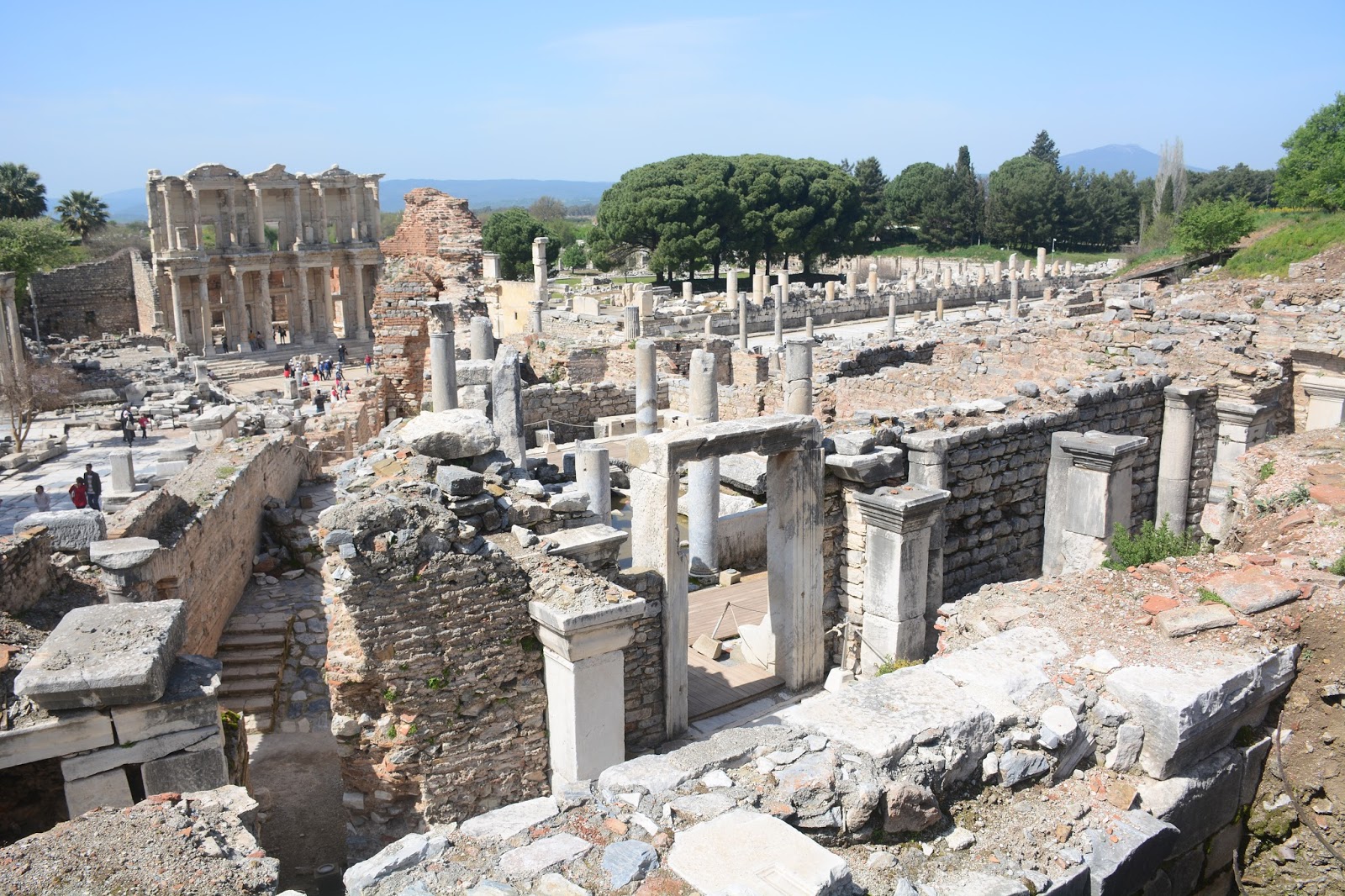
It’s got some old rocks and stuff


Lots of old stuff


There’s a murder-torium. Also used for plays. The people in the middle were having private conversations and I could hear every word. Great acoustics.


The coliseum was used for council meetings too. But most people just know it as a murder-torium, which supposedly sat over 20,000 people. Want to hear quotes from the movie, Gladiator? It’s all people say here.


There’s a high literacy rate in Ephesus


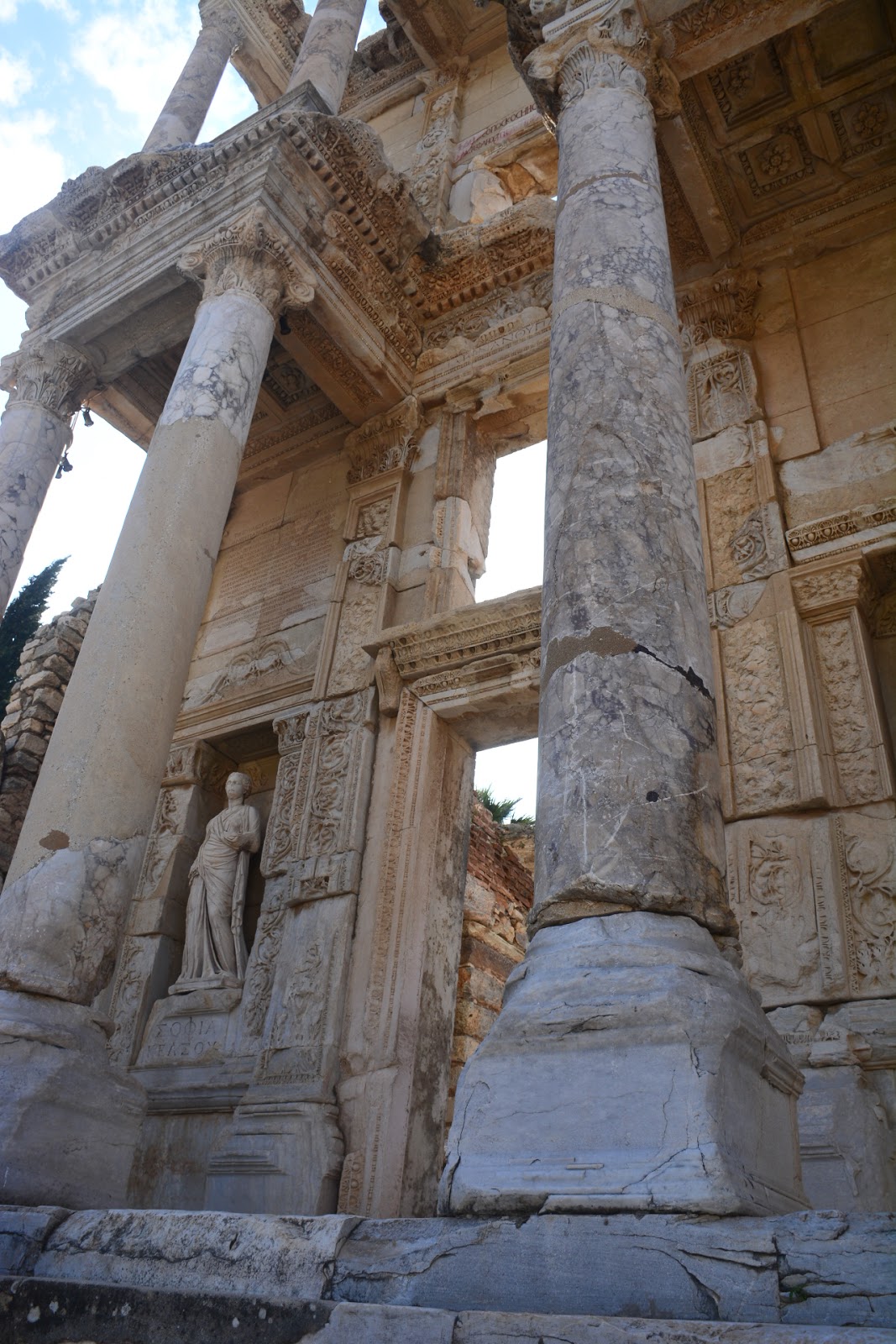
There’s this thing


Here’s another angle


It was actually a library, but archaeologists used to think it was a brothel for a long time. Oh, you naughty books…


If you want to visit Ephesus you'll take a bus to Aydin, then take an hour-long minibus to Selcuk. Get a hostel in Selcuk- Ephesus is only a ten minute mini-bus ride away. The entrance fee is about $10. Bring food in with you, because there are no restaurants inside, and there's only ONE bathroom. I went to the far side of the archaeological site, by another entrance and asked where the bathroom was- they said I had to go back to the other entrance on the opposite side. I pointed to the bathrooms right outside this gate and asked, "Can I use that one?" They said, "Sure, you can exit and use those bathrooms, but you'll have to buy another ticket to come back in." The old stuff is cool, but the new things... not so much.

Ephesus also has a tomb for St. John, the Apostle, and a graveyard for gladiators. I didn't see these things, however, because I had to run to the bathroom, and needed food. Plan your day accordingly. Don't miss things because the site was planned poorly.

Sunday, March 27, 2016

So... I look like a Syrian refugee


My mother’s family is Western European. My father’s is Latino. I have ambiguous, light brown skin, a Caucasian bone structure, with dark eyes, and dark hair.

My ex-girlfriend guessed that I was Armenian when we first met. While living in Shanghai, some people thought I was from Xinjiang, the far western region of China with most of China’s Muslims. While in Turkey, people thought I was Turkish. Others have guessed Italian, and Kazak, and Spanish, and too many to name.

Now I’m in Macedonia, a major stop for the refugees fleeing Syria, Iraq, and Afghanistan, and headed toward Western Europe. The locals in this country have fair skin, Caucasian features, and light colored hair. I DO NOT look like a local, but I do bear a resemblance, I’m told, to the refugees. I also dress like one, apparently. I’m a poor backpacker, and so I buy everything as cheaply as I can and then wear it until it falls apart- sometimes even after it’s fallen apart.

Many people here ask me if I’m from Syria or Afghanistan, sometimes accusingly. Border guards give me and my passport a few minutes of extra attention. When I approach strangers to ask for directions they seem very wary of me- not offering to help until they’ve ‘figured me out.’ Some outright refuse me.

The bus driver from Greece to Macedonia didn’t believe that my passport was real and didn’t want to let me on the bus. Years ago, my pages were almost full from so many stamps and visas, so I paid to have an extra 50 pages put into my passport. This bus driver said dismissively, in his broken English, that I had two passports stuck together. I had to show him the official stamp that explained about my pages being added. He still examined it for another few minutes before he reluctantly let me on the bus.

None of my experiences from these past few weeks have been problems. But it makes me wonder about the people who ARE refugees. If this is the treatment that I get- the constant mini-interrogations- because I’m an American who happens to look like them, what treatment do they get?
Right now there are 15,000 people who look like me, stuck on the border between Greece and Macedonia, because neither country wants them. There are people dying in the water trying to reach outlying Greek islands. There are people expunging their life savings, just for the CHANCE of escaping violence.

Yesterday I missed my train stop while coming in to Skopje, the capitol of Macedonia. I spent 30 minutes haggling with a taxi driver at midnight, in near freezing weather, to get a ride back into the city. I was livid with myself for making the stupid mistake, and wasting money when I didn’t have to. But I reminded myself that there are people in this country with actual problems. It’s good to keep things in perspective. If you sleep in a warm bed, and know where your family is, and have a full belly, and are healthy, then shut the hell up- you’re fine.

If you’re interested in helping out with the refugees, I’ve listed three organizations below, along with the percentage of your money that actually goes to the cause. You know some charities only give like 3% of your donated money. My research for these was done through charitywatch.org.

www.acrelief.org
90% - American Refugee Committee

www.DoctorsWithoutBorders.org
87% - Doctors without Borders


www.Unicefusa.org
77% - UNICEF 

Thursday, March 17, 2016

Cappadocia: Turkey's great treasure


I LOVE the small town of Cappadocia- it's in Turkey. In the middle.


Cappadocia is in a hilly, desert area.

Sometimes it has snow.
 

And sometimes it doesn't.
 

But when it snows, it’s really beautiful.

It has a big castle called Uchisar.


Look how tiny it is!
 

No, but it's actually big- those are caves and tunnels carved into the stone.

It has a beautiful view.
 

Lots to see.
 

There are flowers in Cappadocia.

There are many small towns in Cappadocia- this is Gerome, the town I stayed in. It's the best.

Did I mention Cappadocia has caves? 

There is a whole underground city, with miles of tunnels; early Christians used this underground labyrinth to hide from, and confuse, the Romans. There are all sorts of clever booby traps and decoy tunnels that were implemented.

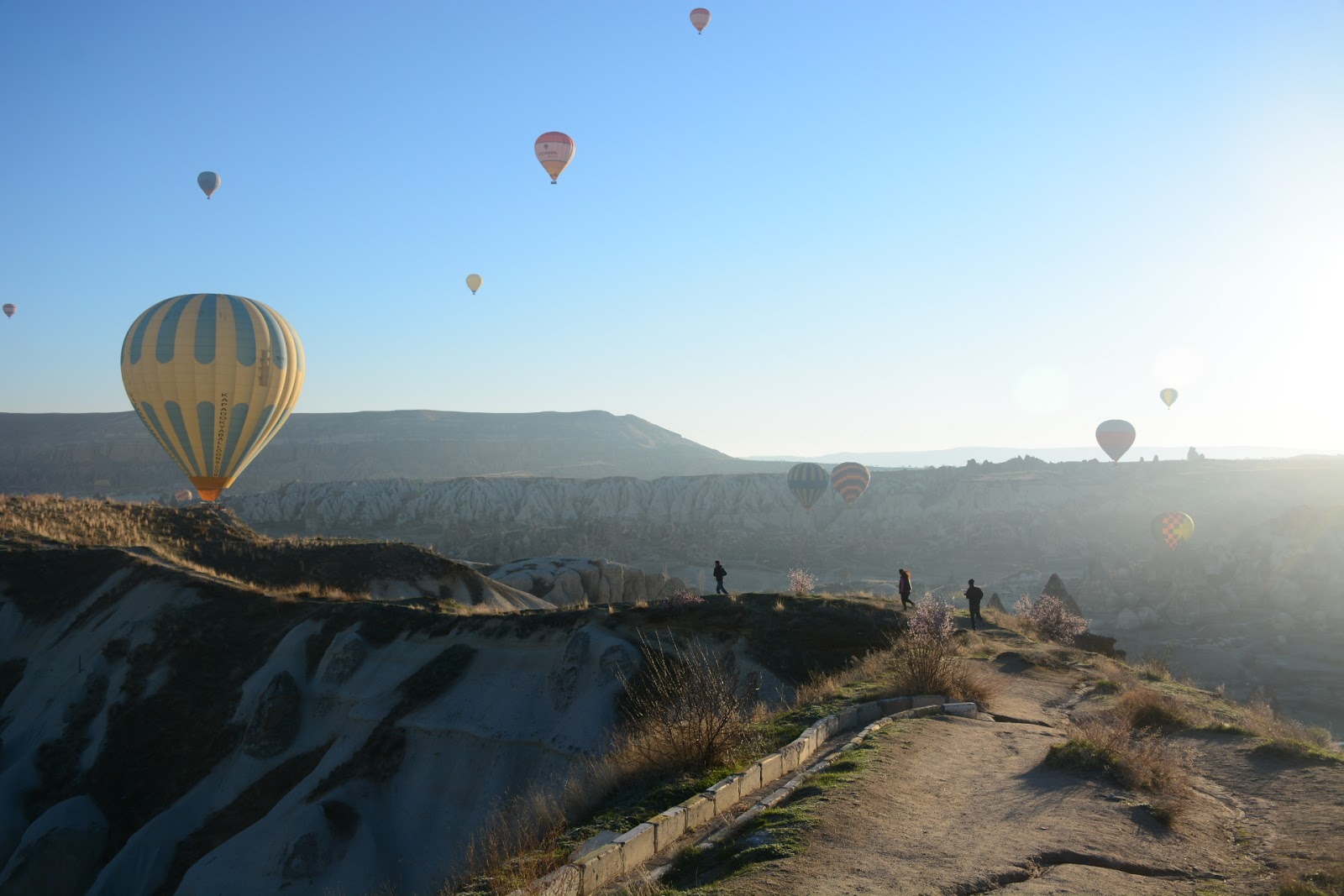
Cappadocia has balloons.
 

A lot of balloons.

They come up with the sunrise.

This is something you want to see.
 

You want to visit Cappadocia- like these smart people.
 

No really, come visit here.

Right now.


Like this guy.


Thanks for reading to the end- here's an extra pic.